


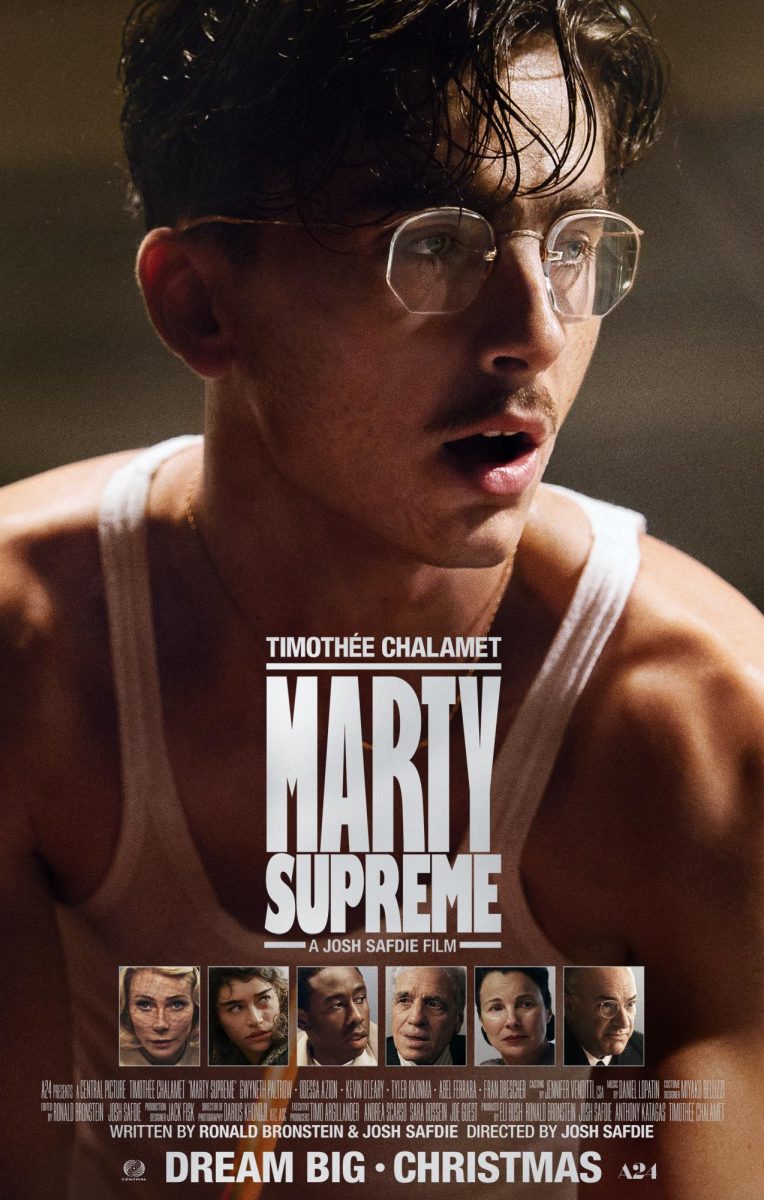
The highly anticipated film “Marty Supreme” hit theaters on Dec. 25, leaving viewers stunned with its emotional writing, engaging plot, and stellar acting performances from actors including Timothée Chalamet, Gwyneth Paltrow, and Odessa A’zion. The film grossed over $56 million after three weeks of its release, and has gained a wide recognition of high ratings on Rotten Tomatoes, IMDB, and Letterboxd.
The plot of the film follows 23-year-old Marty Mauser (Timothée Chalamet), who dreams of becoming the greatest ping-pong player of all time. The story is set in 1950s New York City, but the location quickly jumps to Great Britain as Mauser competes against Japanese table tennis frontrunner, Koto Endo (Koto Kawaguchi). After Mauser’s early defeat, eight months flies by, and audiences are left to watch Mauser scramble for cash to pay for a trip to the Tokyo Table Tennis World Championship.
Director Josh Safdie deserves major props for being able to make many plot points flow coherently and create a stressful atmosphere that transports viewers into the various scenes as Mauser tries to outrun criminals who are hunting him down, people who he hustled that are seeking revenge, and cops attempting to charge him with robbery at gunpoint. Thanks to Safdie and writer Ronald Bronstein, the screenplay created an excellently paced film as the almost three hour run time felt like an hour of action packed scenes and edge-of-your-seat moments.
With this top-notch writing, the cast was given an immense amount of material to work with in the script, creating dialogue that seems true to the characters. Chalamet’s constant snarky comments in Mauser’s role made him become more of an unlikable character, yet viewers are unable to look away as they are in awe of the character’s grit and confidence. With intensity in every scene, characters scream over each other as they pace around the room, creating a raw environment of stress, fear, and twisted excitement.
In addition to a solid cast, the soundtrack and cinematography helped create Safdie’s vision. Whether it be the neoclassical orchestral elements composed by Daniel Lopatin, or pop artists like Tears for Fears making appearances, the soundtrack captivated audiences in even the mundane moments like Mauser walking the streets and the dramatic scenes, including a heated shootout.
Darius Khondji, the cinematographer, heightened scenes with extreme close ups on characters and fluid camera movements, especially the ping pong matches. For example, in Mauser’s matches against his rival, Endo, the cinematography is a series of quick shots with a lot of movement, mirroring the viewing experience of a back and forth table tennis match. With these two technical aspects executed effectively, the final match between Endo and Mauser is a viewing experience that left audiences glued to the silver screen
With the 98th Oscar nomination list being released in late February, many critics are expecting to see “Marty Supreme” nominated for categories like Best Actor, Best Director, and Best Picture. Whether or not these predictions come true, “Marty Supreme” is a sure staple in 2025’s cinematic successes and is one that certainly can’t be missed.